Cart
0
Over the past few years, tallow has re-emerged in skincare conversations after decades of being replaced by synthetic alternatives. While social media often presents it as a miracle ingredient, the reality is more nuanced. Understanding what tallow can support, and where its limits lie, requires looking beyond trends and into skin biology and lipid science.
Beef tallow is not new to skincare. Historically, animal fats were widely used for cleansing and moisturizing long before modern cosmetic chemistry existed. What has changed is not the ingredient itself, but how we now understand skin barrier function and lipid composition.
What Is Tallow From a Skin Science Perspective?
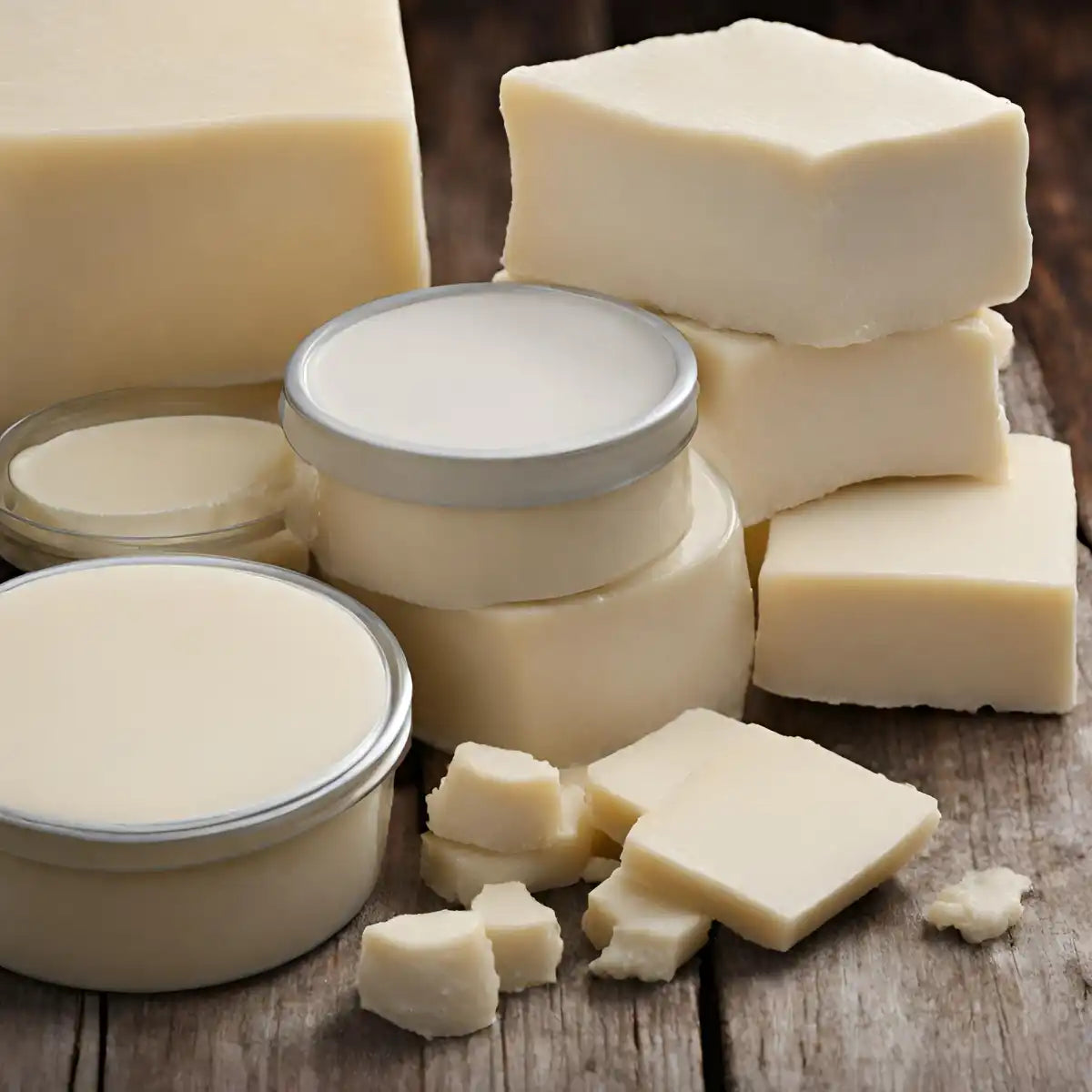
Tallow is a rendered animal fat, most commonly derived from beef. From a cosmetic science standpoint, its relevance lies in its fatty acid profile rather than anecdotal claims or traditional use alone.
According to USDA Food Data Central, beef tallow is primarily composed of oleic acid, palmitic acid, and stearic acid. These fatty acids are also naturally present in the outermost layer of human skin, known as the stratum corneum, which plays a critical role in barrier function and moisture retention.
This similarity does not imply that tallow becomes part of the skin or repairs it directly. Rather, it suggests that tallow can function as an effective emollient and occlusive, helping to reduce trans epidermal water loss when applied topically.
1- How Tallow Supports the Skin Barrier?
Dermatological research consistently shows that impairment of the skin barrier contributes to dryness, irritation, and increased sensitivity. Lipids applied topically can help reinforce this barrier by forming a protective layer that slows water evaporation.
Tallow falls into this category. It does not hydrate the skin by attracting water, as humectants do. Instead, it helps seal existing moisture. This makes it particularly useful for dry or compromised skin types, especially in environments with low humidity or frequent cleansing.
Understanding this distinction is important, as it helps set realistic expectations for how tallow-based products function.
2- Who May Benefit Most From Tallow-Based Skincare?
Because tallow acts primarily as an emollient and occlusive, it tends to be most suitable for skin types that struggle with moisture retention rather than excess oil production.
Individuals with dry, dehydrated, or barrier-compromised skin may find tallow helpful in reducing tightness, flaking, and general discomfort. This includes skin affected by cold weather, environmental stress, or overuse of active ingredients.
For sensitive skin, tallow’s relatively simple lipid composition can be advantageous, particularly when compared to complex formulations containing multiple active compounds. Fewer components often mean fewer opportunities for irritation, provided the tallow is properly rendered and purified.
3- Limitations and Common Misconceptions
Despite its benefits, tallow is often surrounded by exaggerated claims that are not supported by scientific evidence.
Tallow does not treat or cure skin conditions such as eczema, psoriasis, or acne. While some individuals report subjective improvement when using tallow-based products, these outcomes are not equivalent to clinical evidence. Improvements are more accurately attributed to reduced irritation and improved barrier support rather than therapeutic action.
It is also incorrect to assume that tallow is universally non-comedogenic. Skin response varies significantly between individuals. While some tolerate tallow well, others, particularly those with very oily or acne-prone skin, may find heavier lipid textures unsuitable.
4- The Importance of Quality and Processing
Not all tallow is equal. From a formulation perspective, the quality of tallow depends on its source, rendering method, and level of purification.
Poorly rendered tallow may retain impurities or odor-causing compounds that reduce both stability and user experience. In contrast, properly refined tallow should be neutral in scent, smooth in texture, and stable in storage.
Many negative perceptions associated with tallow stem not from the ingredient itself, but from inadequate processing.
5- Tallow in a Modern Formulation Context
In contemporary skincare, tallow is best understood as a supporting ingredient rather than a stand-alone solution. It performs best when paired with ingredients that complement its occlusive properties, such as lightweight humectants or calming botanical extracts.
Modern cosmetic science does not require choosing between traditional and plant-based ingredients. Instead, it encourages thoughtful formulation based on skin physiology, ingredient function, and individual needs.
6- What Tallow Can - and Cannot - Do
To summarize clearly:
Tallow can:
- Support the skin barrier
- Reduce moisture loss
- Improve comfort in dry or sensitive skin
Tallow cannot:
- Cure skin conditions
- Replace medical treatment
- Guarantee results for all skin types
Recognizing these boundaries is essential for maintaining realistic expectations and evidence-based skincare practices.
References
- Elias, P.M. – Stratum Corneum Defensive Functions, Journal of Investigative Dermatology
- DermNet NZ – Emollients and Occlusives in Skincare
- Lodén, M. – Role of Topical Emollients in Dry Skin, American Journal of Clinical Dermatology
- USDA FoodData Central – Beef Tallow Fatty Acid Profile